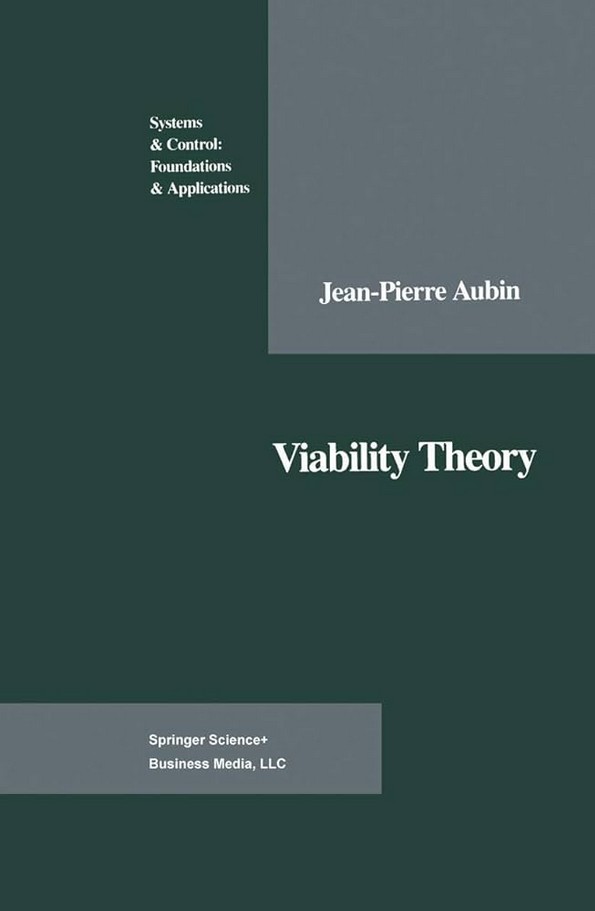
Théorie mathématique de la viabilité en anglais
Cet atelier propose une introduction appliquée à la théorie de la viabilité, notamment dans le cadre des écosystèmes soumis à des contraintes environnementales. Les participants exploreront comment formaliser des politiques durables de gestion à l’aide d’algorithmes de viabilité, et comment modéliser la résilience d’un système via des cas concrets comme l’eutrophisation d’un lac ou la gestion d'une population.
- Comprendre les bases mathématiques de la viabilité dynamique.
- Utiliser des modèles simples pour représenter des contraintes écologiques.
- Manipuler un simulateur interactif pour visualiser les trajectoires viables.
- Favoriser les échanges entre chercheurs, étudiants et praticiens.
LUNDI 27 AVRIL
8h15 - Rendez-vous de l’ensemble des participants devant la Bibliothèque Universitaire
SESSION 1 : POSER UN PROBLEME EN VIABILITE
Animateur : Bates – De Lapparent - Lavallée - Désilles
8h30 - 8h50 La viabilité mathématique en question ? (Samuel Bates)
8h50 - 9h50 Concept et illustration du noyau de viabilité (François Lavallée)
Pause & discussion
10h00-11h15 Formuler mathématiquement un problème de viabilité (François Lavallée)
11h15-12h00 Cas de résolution analytique de la viabilité (François Lavallée)
Déjeuner
13h30-14h15 Cas de résolution numérique de la viabilité (François Lavallée)
14h15-15h00 Cas de résolution de viabilité avec cible terminale (François Lavallée)
Pause & discussion
15h15-16h00 Cas de résolution de viabilité en situation de risque (François Lavallée)
16h00-16h45 Cas de résolution de viabilité en situation d’incertitude (François Lavallée)
Pause & discussion
17h00-17h45 Cas de résolution de viabilité multi-agent (Alice De Lapparent)
MARDI 28 AVRIL
SESSION 2 : L’INFORMATIQUE DE LA VIABILITE
Animateur : Désilles - Lavallée
8h00-9h00 Préparation à l’informatique de la viabilité (Anya Désilles)
9h00-10h30 Présentation du logiciel Viablab (Anya Désilles)
Pause & discussion
10h45-11h15 Enjeux informatiques sur les noyaux de viabilité (Anya Désilles)
11h15-12h00 Enjeux informatiques sur les trajectoires de viabilité (Anya Désilles)
Déjeuner
13h30-15h30 Atelier de manipulation du Logiciel autour d’un cas d’étude (1/2) (François Lavallée & Anya Désilles)
Pause & discussion
15h45-17h45 Atelier de manipulation du Logiciel autour d’un cas d’étude (2/2) (François Lavallée & Anya Désilles)
MERCREDI 29 AVRIL
SESSION 3 : ATELIERS THEMATIQUES D’APPLICATION
Animateurs Désilles - Gloglo
8h00-10h00 Atelier autour de AgroViablab : Illustration vers une montée en
complexité (Anya Désilles)
Pause & discussion
10h15-12h15 Brainstorming autour d’AgroViablab (collectif)
Déjeuner
13h45-15h45 Atelier d’application sur un système monétaire : Illustration vers une simplification de complexité (Beringer Gloglo)
15h45-17h45 Brainstorming sur les applications (collectif)
18h00-19h00 Séminaire sur la viabilité en économie monétaire (en marge de l’école chercheur à destination des étudiants de Master d’économie) (Beringer Gloglo, Samuel Bates)
JEUDI 30 AVRIL
SESSION 4 : MODELISATION EN VIABILITE
8h00-09h00 Brainstroming autour d’un 1er sujet de modélisation (collectif)
9h00-10h00 Brainstroming autour d’un 2e sujet de modélisation (collectif)
Pause & discussion
10h15-11h15 Brainstroming autour d’un 3e sujet de modélisation (collectif)
11h15-12h00 Retour d’expériences
Déjeuner & clôture hors les murs (13h00-17h00 : Saint-Pierre)
L'atelier aura lieu à l'Université des Antilles, Pôle Martinique
- Pablo Andres-Domenech
- Valérie Angeon
- Samuel Bates
- Abdoul Cisse
- Issaka Dialga
- Beringer Gloglo
- Thaly Janloup
- Eric Kamwa
- Kevin Spinassou
Mathématique
- Severine Andouze/Bernard
- James Larrouy
- François Lavallée
- Loïc Louison
- Paul Silvere Nuiro
Géographie
- Etienne Delay
- Pastel Audrey
Agronomie
- Alice De-Lapparent
Informatique
- Anya Désilles